
Klimmek News
A Journey to Northern Spain in Search of Chestnut
Apr
Estimated reading time: 4 minutes
For us, material selection is never incidental—it’s foundational.
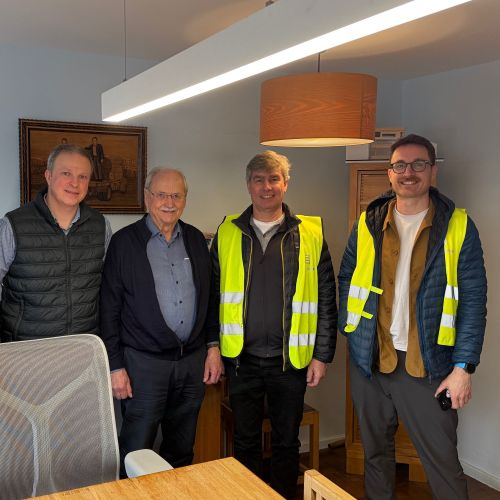
Recently, we travelled to northern Spain alongside our collaborators at Ponc Design to visit a new timber supplier. The goal was clear: to source a material that not only meets our aesthetic and structural standards, but also aligns with how we believe furniture should be made today—responsibly, transparently, and with longevity in mind.High-quality timber is, by its nature, global. However, that often comes with a hidden cost—complex supply chains spanning continents, and a carbon footprint that’s difficult to justify.
Why Look Beyond Ireland?
From the outset of the Ponc collaboration, we set a clear intention: reduce that carbon footprint wherever possible, without compromising on quality.
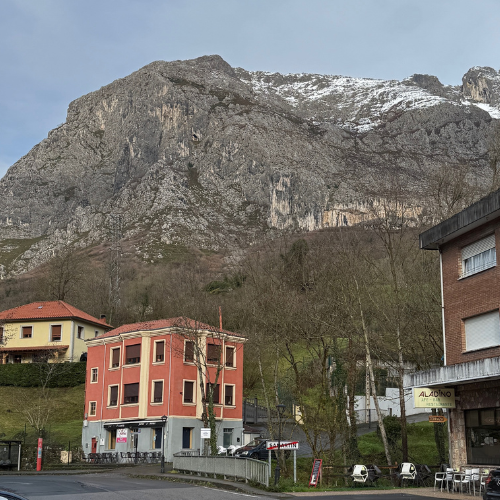
That led us to Asturias, in northern Spain.
A Material Worth Travelling For
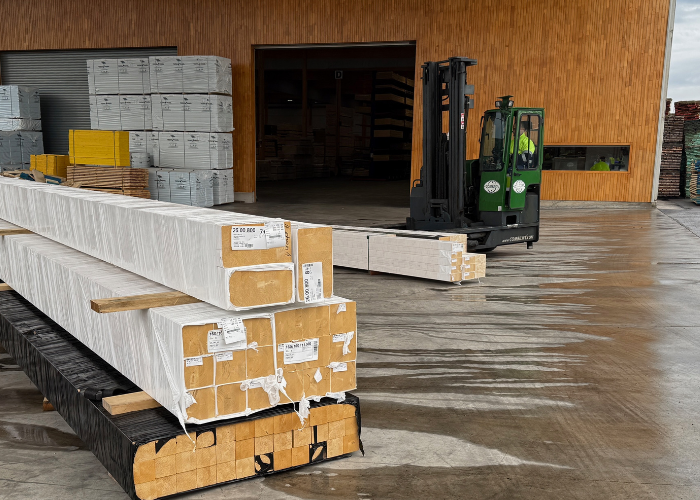
Our visit was to a third-generation, family-run producer, Siero Lam, specialising in chestnut—a hardwood rarely used in Ireland but one that offers compelling advantages.
Chestnut shares many of the desirable qualities of oak but with a lighter, more refined tone. It is naturally durable, rich in tannins, and particularly suited to both structural and decorative applications. Historically, it has been used in outdoor construction and cladding—proof of its longevity.
What makes Asturian chestnut distinct, however, is its consistency.
In much of Europe, chestnut can be affected by a defect known as ring shake—a natural separation within the growth rings caused by environmental stress. In the microclimate of Asturias, this issue is significantly reduced. The result is a more stable, reliable material, with a uniformity that is critical for precision-made furniture.
Seeing the Full Journey
One of the most important aspects of the trip was proximity.
The forests where the timber is grown lie within 100km of the processing facility. We were able to walk the source, see how the material is managed, and follow its journey through conversion and drying—all within a tightly controlled geographic area.
That level of traceability is rare—and increasingly essential.
It allows us to stand over not just the finished product, but every stage that leads to it.
Why Chestnut for the Ponc System?
The decision to transition from oak to chestnut for the Ponc modular shelving system was not made lightly.
Two factors were decisive:
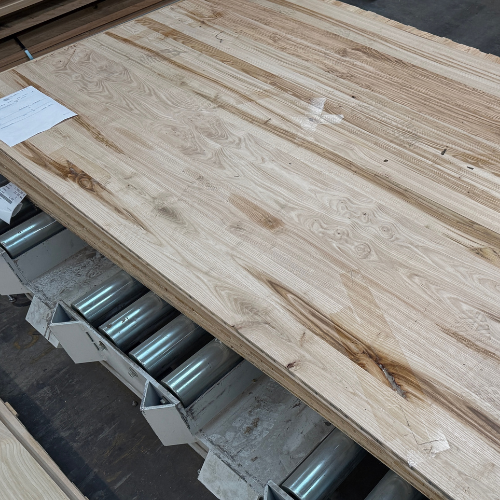
- Material consistency: Minimal sapwood results in a more uniform surface, critical for a clean, architectural finish.
- Finish quality: The open grain structure accepts colour exceptionally well, allowing for greater control in the final aesthetic.
For designers and architects, this translates to predictability—what you specify is what you get.
Designing for a Changing Industry
This shift also reflects a broader reality.
New EU regulations on deforestation-free products (EUDR) are coming into force, requiring all manufacturers placing timber-based products on the EU market to demonstrate full traceability and prove that materials are not linked to deforestation.
For many, this will be a compliance exercise.
For us, it reinforces a direction we’ve already chosen.
By working with suppliers who can clearly evidence origin, processing, and transport, we’re not only meeting future regulatory requirements—we’re ensuring that the materials we use are aligned with the values we design around.
A Considered Approach
Trips like this are not about finding alternatives—they’re about refining standards.
The materials we choose define the integrity of what we make. By investing time in sourcing, understanding, and verifying those materials, we ensure that every piece we produce carries that same level of consideration.
